Categories
News Special Club Sessions & Kyu Gradings

Club Training & Grading, July 2012

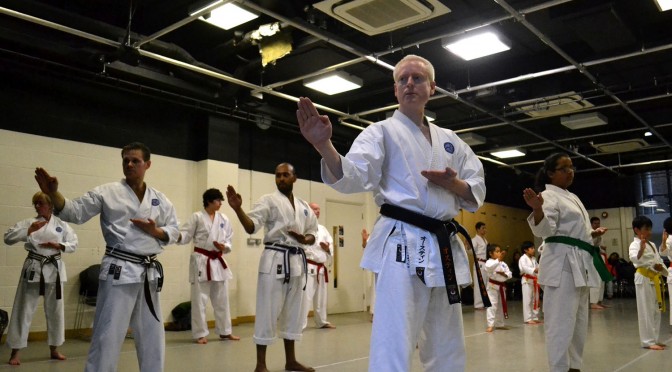
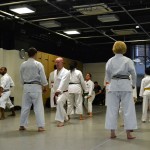
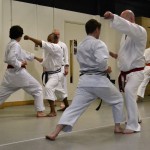
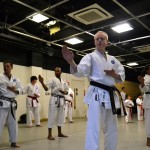
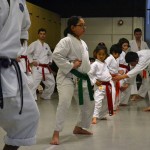
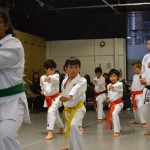
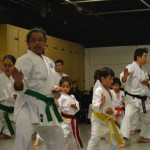
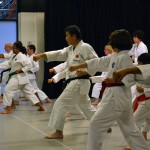
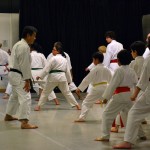
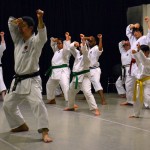
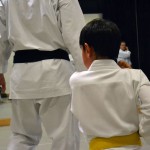
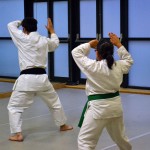
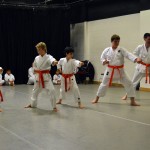
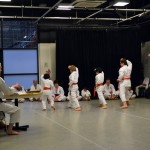
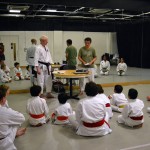
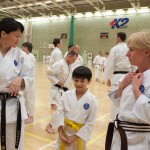
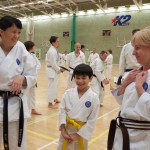
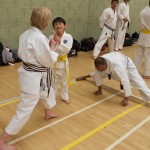
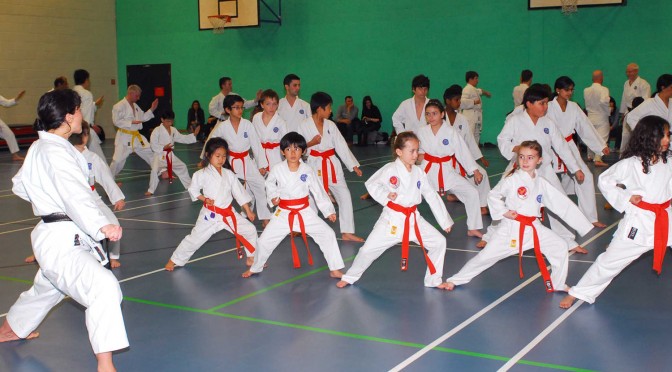
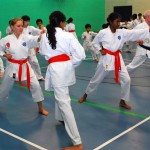
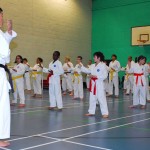
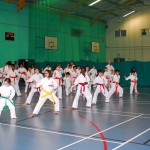
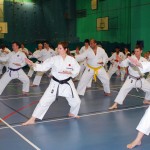
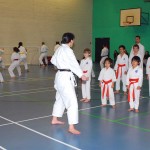
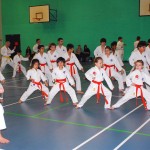
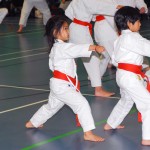
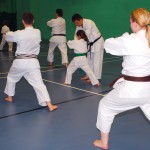
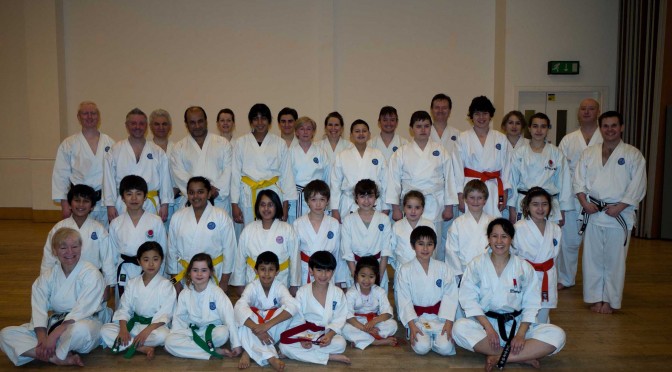
For Shiranamikai’s second special lesson and grading this year Ohta Sensei delivered a challenging training session with plenty of emphasis on footwork and distancing. The tramline markings on the floor of the studio were put to good use as guides to help us understand the range and width of our own steps.

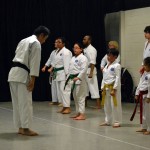
A bout of nerves crept in here and there during the grading but there were no dramas. Overall, the extra practice that everybody had been putting in for the National Championship seemed to have helped boost confidence, and it was a clear pass for all.

The next grading will take place on Friday 21st September and as ever the best time to start working on addressing your feedback is while Sensei’s comments remain fresh in your mind! The forthcoming kata course (taking place this Sunday 22nd July) could be a great way to get ahead.

Well done to all.

Categories
JKA Competitions News

JKA England 2012 National Championship

After a whole day cooped up in a stuffy sports centre in Slough, Shiranamikai karateka were keen to get back home. Our team put in a set of great performances across a range of categories and came away from this year’s Championship with five SEVEN medals! Well done to all.

First up for kata were the youngest juniors. All performed well on their first competition outing. Yassin put in a powerful and confident performance but after holding another strong competitor to a draw twice in the first round he was unlucky to lose the final decision in the tie-breaker. Anju’s accurate technique and super kiai saw her through to the final, where her Heian Nidan earned her the silver medal!

The older boys and girls also performed well in kata. In the 6th Kyu to 4th Kyu category Shivani got through to the final, where a solid Heian Sandan earned her silver. Parth achieved the bronze medal position in the Boys’ 3rd Kyu and above group, demonstrating nice hip rotation with Tekki Shodan.

In the ladies senior kata, Beth’s hesitation and Sasha’s minor stumble saw them both eliminated early on. In the men’s division, Austin went all the way to the semi finals, where he performed Jion to earn a place in the final four and earned bronze with a smoothly executed Gojushiho Sho.

Much, much later in the day the kumite events took place! Several of our juniors made it through the first round but it was Matthias who took bronze for a strong sanbon kumite (13-15 years). Lisa did well to earn a bronze medal for ladies kumite (9th to 6th Kyu), while Peter took bronze in the mens!

It was great to see everyone mixing and enjoying the day together, showing good spirit and trying their very best. We’ve all come away motivated and with ideas on how we can improve on our karate. Thanks to all the competitors and supporters for contributing to a great day!

Next year’s Championship will hopefully be held in slightly more salubrious surroundings with more seats and a nice cafe. We look forward to building on what we achieved this year.

Categories
JKA Courses News

JKA England Spring 2012 Gasshuku

This Spring, visiting instructors Tsuyama Katsunori 8th Dan, Osaka Yoshiharu 8th Dan and Hirayama Yuko 6th Dan joined Ohta Yoshinobu 7th Dan for JKA England’s four day special international course.

Enroute to the K2, we hit heavy traffic because of someone’s caravan having swung across the motorway, so we had to take a detour along the A-roads and through some villages. We arrived at the sports centre just after the warm up and bowed straight in. While it was frustrating to arrive a bit late, at least the detour had allowed us to spot a few foodie pubs where we would be able to refuel between training sessions!

The four day course was, as always, carefully planned. Content from each day complimented the other sessions. Participants were split into groups according to grade with the course instructors rotating between the groups. For the sandan and above group, the first part of day one included repetitions of punches, mae geri and combinations of the two. These seem to be trademark basics of Tsuyama Sensei, who taught at the famous Takushoku University club for four decades. But as we all know, ‘basics’ doesn’t necessarily mean ‘simple’ or ‘easy’. What we learned from these exercises regarding points to pay attention to was echoed over the next three days.

Both Senior Sensei; Tsuyama and Osaka were very specific about the quality of movement that more experienced karateka should be aiming for. For instance, each had us finishing a sequence with choku tsuki. We had to make sure we used the action of our ankle pushing the heel down onto the floor to direct the energy upwards through our legs, to our hips, body, arms and ultimately fists. Rather than simply dropping or falling into a stance both instructors wanted precise control, correct transfer of energy and the feeling of keeping the Jiku ashi and core active throughout the sequences.

Kata was reserved mainly for the second part of each day but the first session for sandan and above on Friday covered Bassai Dai and Jion with Osaka Sensei. We followed this in the second session with Hirayama Sensei’s Bassai Sho, a kata which has taken her to the final of the All Japan Championship and the Funakoshi World Cup on numerous occasions.

On Saturday, we studied Chinte and Gojushiho Sho with Ohta Sensei by request of those who were due to take a dan grading. Time was spent working through Chinte with detailed explanations and lots of bunkai partner work. Sensei highlighted the use of a variety of different circular movements in Chinte, before demonstrating this beautiful kata to us, with incredible control and smoothness.

Both Osaka Sensei and Hirayama Sensei are well known for being excellent exponents of the kata Sochin. With this in mind, I was hopeful, that we would get to study it at some point, and was not to be disappointed. Hirayama Sensei led us dynamically through Sochin on Sunday and we finished off by having two halves of the room divide and perform the kata in turn. What exactly Hirayama Sensei said afterwards is lightly disputed between Sasha and me, who were on opposing sides. Suffice to say we both think that our own side’s performance was preferred!

Sochin is characterised by its deep-rooted fudo dachi stance, powerful arm techniques and the contrast between slow and fast. The challenge is very much in maintaining smooth, controlled movements, keeping the heel down, back straight and rotating the hips.

Finally on the last day, we were back with Osaka Sensei for Gojushiho Dai, some wrong turns (er… by me) and a very achey left leg (me again).

There were some exciting kumite matches during the International Team Friendly Tournament on Saturday afternoon. Teams consisted of two female and three male competitors. The results were 1st place: England Team A, 2nd place: Norway, 3rd place: England Team B. But it wasn’t just the competitors who had their work cut out because Osaka Sensei and Hirayama Sensei were scrutinising the judges and referees as part of their JKA World Federation qualification test! Well done to all, I think!

There was a very good turn out from Shiranamikai over these four days (fifteen of us in all!) which was great to see. However, a special “well done!” goes to Sheila, Beth, Yassin and John who along with Sasha and myself, attended every possible day, receiving a special certificate at the end. I’m told that in total, there were around five hundred attendees over the four day period!

This year, there was even a buffet and party at the designated event hotel: Arora. Thankfully speeches were few and short but the highlights included a presentation to Mrs Chieko Buck and an impromptu (Norweigan) song by Geir Larson, Chief Instructor of Norway! A disco followed, where everybody had the opportunity to let their hair down and where Yassin could be found, right in the middle, for the majority of the evening!

This spring’s special course was a great event – everybody who I have spoken to since has said the same. I for one am very much looking forward to the next one.

Roll on, September!

Austin

Categories
News Special Club Sessions & Kyu Gradings

Club Training & Grading, March 2012

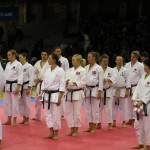
It was nice to welcome Ohta Sensei for his first visit to Harrow-on-the-Hill.

We had a one and a half hour training session before the grading which left us all satisfyingly red-faced and sweaty. Sensei kept us together for the basics and kumite portions of the class. As the session progressed Sasha and I ran two separate mini classes to allow the junior grades to focus on their kata.

The grading itself featured quite a spread of grades. From Sensei’s feedback, we have picked out the key areas for students to focus on. We have already begun to work on some of these pointers in our spring classes.

Congratulations to all who passed. The next club grading will take place on 28th June for those who are eligible. Shortly after this comes the National Championship on 7th July, followed by an all grades kata course on 22nd July. For all those who are interested in taking part in these events, we’ll be offering extra training on Saturday afternoons and Wednesday evenings.

There’s also the JKA Spring International Course to look forward to from 4th-7th May at the K2 Centre in Crawley, Sussex, where the training will be led by special guest instructors from Japan. Tsuyama Sensei 8th Dan, Osaka Sensei 8th Dan and Hirayama Sensei 6th Dan will join Ohta Sensei 7th Dan in what promises to be a fantastic long weekend.

Austin

Many thanks to Mihono for the photos!

Categories
JKA Courses News

JKA England All Grades Course, February 2012

When I reached the car I realised that I’d forgotten to pack my dogi and belt (the only essential items for a karateka). Factor in the McDonalds breakfast, petrol, snack stops etc. and all of a sudden, we’re cutting it fine. Fortunately when we arrived at Bath Sports and Leisure Centre, the course had not yet started. So there was still time to register and have a chat beforehand.

After a moment to estimate the numbers of different grades present, brown belts were relocated to another studio upstairs with Adel Ismail, a JKA England senior instructor. Kyu grades stayed in the same area as black belts but were taught separately by a rotation of different instructors. The dan grade session is what I have summarised.

Gary Stewart, JKA England Squad Coach, warmed us up and later on delivered an engaging kumite lesson with reaction timing training against a partner. One exercise involved responding to a partner’s attack by cutting in with the same technique and trying to score first (sen no sen). We also tried applying the same principle to contrasting techniques, like mae geri versus gyaku tsuki. We finished off with some strength and stamina exercises, one of which was burpees with gyaku tsuki to improve speed and overall fitness.

Ohta Sensei, in his first session, started off with hip rotation before adding a combination of gyaku tsuki, kizami tsuki, uraken and step. We were soon facing each other and using soto uke, age uke, and nagashi uke as the corresponding defence, with gyaku tsuki as the counter attack. Sensei focused a lot on the idea of ‘blocking on the way’, for example making the block during a change of stance rather than timing it to coincide with the end of a step. This was most apparent with his near simultaneous mae geri, oi tsuki combination: the defender had to start the first block early while beginning to transfer their weight and leading leg back. At the moment when nagashi uke was used to block the punch, the step backwards was already in motion. Then immediately after landing the back foot, we had to push off from it, spring forwards to close the distance and counter with uraken.

After a five minute break, referees and squad were off to practise together, while Ohta Sensei worked through choice kata for those who were attempting their Nidan gradings: Jion, Empi and Nijushiho. All were explained and demonstrated skilfully by Sensei as always.

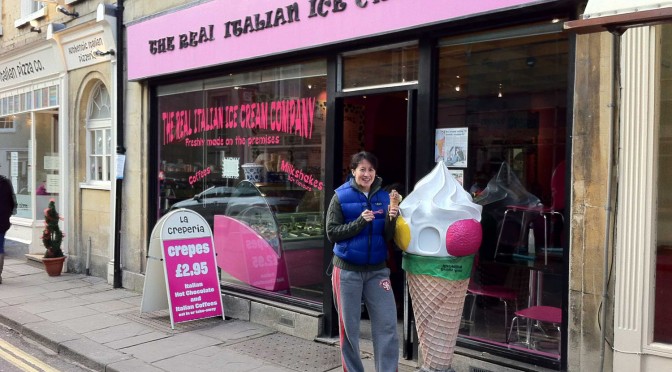
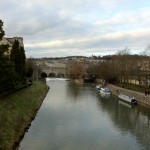
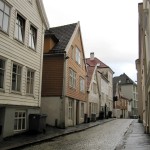
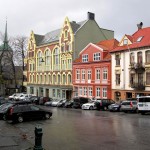
Unfortunately we didn’t manage to take any photos of the course itself. But to prove we were really there, I did take a few snaps in Bath afterwards!

The next JKA England event open to all grades will be the international course held over the May Bank Holiday weekend and lasting four days. Why not join us there? You could book the Friday afternoon off work and make a weekend of it! More details to follow soon.

Austin

Categories
News Special Club Sessions & Kyu Gradings

Sensei Sue Waughman Visits Shiranamikai, 14th February 2012

From time to time we like to invite guest instructors to the club. Experiencing the different teaching styles and body dynamics of other instructors helps to broaden your karate horizons. And to have a fresh pair of eyes scrutinising your karate can serve as an incentive to make you work that little bit harder.

Sensei Sue Waughman 4th Dan JKA is an instructor at London’s Budokai dojo and trained at Takushoku University under Tsuyama Sensei in Japan during the 1980s. As such she is no stranger to pressurised training environments in which students are pushed to give their best.
Sensei delivered the lesson with lots of passion. She demanded complete concentration and encouraged us to start our movements explosively. “Usain Bolt!” she cried out, requiring us to emulate one of the greatest 100 metre sprinters of all time.

As we stood balanced on one leg during practise for mae-geri, Sensei encouraged the juniors to challenge themselves. “Anybody…” she said, dropping the knee of the kicking leg lower than the ideal preparation position and letting her ankle loosen. Then in contrast, keeping the leg tightly tucked and the ankle flexed correctly, “…A world champion!”. Sensei also directed a lot of pressure towards our seniors, driving them to perform kumite over and over again until she was satisfied.

One thing that you cannot help but have noticed is Sensei Sue’s all or nothing approach – for her, training comes first and anything less than 100% will not do. We train to develop truly powerful and focused techniques, such that one decisive technique is all that would be required if a physical confrontation became unavoidable.
The somewhat intimidating expression ‘ikken hissatsu’ – meaning to ‘annihalate with one blow’ is a reference to this concept and you will hear karate practitioners refer to it from time to time. But take care to understand what it really means, and how it can be applied without contradicting our commitment to self-control and development of character. The concept of ‘technique for maximum effectiveness’ is secondary to the benefits that karate brings to the whole person.

SueWaughman_P1040958_LREach of us would hope never, ever to be put in a position in which we would be seeking to achieve a literal ‘ikken hissatsu’. But the philosophical equivalent of the same concept is to make every single action count, delivering each one with focus and to the best of your ability. It is this idea that we wanted you to experience for yourselves.

Thanks to all those who supported this event – we hope it served as something a little different from the usual scented candles and rose petals on Valentines night!

Categories
Articles News Outside The Dojo

New Year’s Resolutions

Have you made any new year’s resolutions? Common ones are to get fitter, change your eating habits for the better, spend less, and become more organised. Perhaps you’ve got a resolution that relates specifically to karate. But surveys show that most people’s good intentions will have fallen by the wayside after as little as a few weeks! We stand more chance of success if:

  • Our goals reflect a deep desire to achieve or change something
  • We break down our goals into a series of challenging yet achievable steps, with an action plan and realistic timeframes
  • We share our goals with people who will support us
  • We regularly review progress and adapt our action plans accordingly.

In karate, the kyu grading system provides a means to measure progress. But while the grades are useful and motivating markers, we need to be careful not to confuse them as being equivalent with systematic goal setting. From grade to grade, take care to think about more than just the desired outcome (e.g. “to achieve my green belt by March 2012”). More importantly, consider the performance level that you’ll need to achieve and set intermediate goals and an action plan to reflect this.

For example, a few corresponding goals and actions for someone working towards 6th kyu might include these: increase fluency of my current kata by doing 10 good repetitions each evening; develop a better range of hip rotation by practising 50 rotations from hanmi to shomen in zenkutsu dachi per day; Memorise the feel and angles for correct kiba dachi and practise holding this position for 60 seconds each day.

So what would you like to achieve in karate in 2012? Why not make a plan now and regularly update it as you continue to improve? Whether your ultimate goal is to get to black belt and beyond, to become a JKA World Championship medallist, or simply to get fitter and healthier through regular training, we look forward to seeing continued progress in 2012!

Categories
JKA Courses News

JKA England All Grades Course, December 2011


Course with Sensei Daniel Lautier 7th Dan, Chief Instructor of JKA France and Ohta Sensei 7th Dan, Chief Instructor of JKA England

Sensei Lautier advised our group of more than a hundred dan grades that we would be doing “just five basic moves – easy”, but his wry smile suggested this wasn’t the full story. Sure enough, Sensei had thoughtfully choreographed five sequences combining front, side and back stance with multi-directional turns; first accompanied by hand techniques, then with the addition of kicks.

I think it would be fair to say that most of us found this session to be a challenge. However Sensei Lautier was patient and in between sets, gathered us around for a recap and additional explanation. But he also took these opportunities to make the task more difficult each time! With so many other people moving and turning around you, it’s easy to become distracted, then end up copying people in your periphery instead of persevering on your own. So Sensei had each row of students start the combination with a different leg forward.

Cendrine’s characterful translations were superb – her colourful explanations really added to the day’s positive atmosphere. “Pardon my French!” she said afterwards.

We rounded off Lautier Sensei’s session by practising Jion, with all those intending to grade lined up along the front row for Sensei to scrutinise.

After a short break, Lautier and Ohta Sensei swapped groups. Ohta Sensei had our group working through kumite drills: the attacker (from uchi uke, back stance) shifting their weight forwards into front stance, attacking kizami tsuki, gyaku tsuki; the defender shifting their weight rearwards into back stance and defending age uke, soto uke (then countering gyaku tsuki, front stance to repeat the cycle). Another exercise used mae geri as the attack with the blocker shifting sideways (with a cover block) to avoid its path and counter-attacking with kekomi, gyaku tsuki.

Ohta Sensei’s method of introducing a kata often starts with basics and kumite combinations inspired by the movements in that kata. And in this case the exercises we had been working on were preparation for Nijushiho. It’s always impressive to see Sensei ingeniously break down a kata then build it back up bit by bit. He then treated us to his own performance of Nijushiho, explaining key points along the way.

To end the course, we each chose from Empi, Jion, Nijushiho and Meikyo, forming groups to work on our preferred choice.

This was the last JKA England course of 2011 but there is already a full schedule of events planned for next year with opportunities to train with Ohta Sensei and other world class instructors.

Austin

Categories
JKA Courses News

JKA Norway 25th Anniversary Gasshuku, 2011

In November 2011, JKA Norway held a special 4-day Gasshuku in celebration of a successful 25 years. Larsen Sensei 7th Dan and Ohta Sensei 7th Dan were in attendance, as were a line-up of no less than 11 instructors from the JKA Headquarters dojo in Tokyo, Japan. To see this many Honbu instructors together at an event outside of Japan is probably unprecedented! The course was attended by karateka from over 17 nations and on each day of the training there were over 600 participants.

Memorable sessions included studying Sochin with Taniyama Sensei and Nemoto Sensei. We paid particular attention to smooth transitions from stance to stance, effective use of the supporting leg and also on making precise, quick Shuto Uke.

A kumite session with Ogata Sensei provided some useful drilling on the use of yori ashi. The exercises we practised were simple yet the concentration needed to apply the techniques with correct distancing, timing and control created an intense atmosphere. On ending his session, Ogata Sensei reminded us that care and respect for others was one of the most important responsibilities for a karateka to uphold. He explained that while the techniques we develop through karate training can potentially be used to devastating effect, there was nothing uglier than hurting a training partner through a lack of consideration. There was far more beauty, said Ogata Sensei, in having the mental and physical skill to perfectly control what would otherwise be a lethal technique. It’s the same idea in our everyday interactions outside the dojo – where we should take care that our actions and words do not cause offence or hurt to others.

Naka Sensei’s ability to create whip-like power through fluid use of his body was awe inspiring. We practised Tekki Sandan and with our minds occupied on remembering the sequence itself, many of us struggled to get anywhere close to Naka Sensei’s quality of movement. The lack of repetition and sequencing in this kata, coupled with the inclusion of some familiar movements that also appear in Tekki Shodan, make for a mind-boggling combination!

Imura Sensei worked through a number of exercises to help us develop the strength and flexibility needed for Jitte. Some of these were very hard work yet great fun. One challenging exercise involved working with a partner. With one person maintaining a strong and stable kiba dachi, the other would suspend themselves in an almost upside-down position by wrapping their legs around their partner’s waist. Then, while hanging on for dear life, the suspended partner had to perform sit-ups!

On the penultimate day of the course there was a team kumite match between Japan, England, Norway and Germany. England were represented by five JKA England squad members: George, Chris, Twanda, Rachel and Jana. There was a fantastic atmosphere, particularly with the host country cheering on their national team and with strong spirit being shown by all the competitors and their supporters. Japan, fielding a team of recent and current All Japan and World Championship medallists, were the eventual winners. Watching the Japanese fighters, I was impressed to see Okuie Sensei’s direct and postitive lines of attack and by Shiina Sensei’s intuitive sense of timing. But the outcome of the match was by no means a foregone conclusion, with some strong performances put in by the European teams too.

On the last day of the course, we were treated to a rare display of free fighting by Japanese instructors. While this is incorporated into their daily instructor training, it is unusual for non-Honbu instructors to be allowed to observe it. The exchanges were fluid and skilful, and it was interesting to see the instructors experimenting with holds and takedowns.

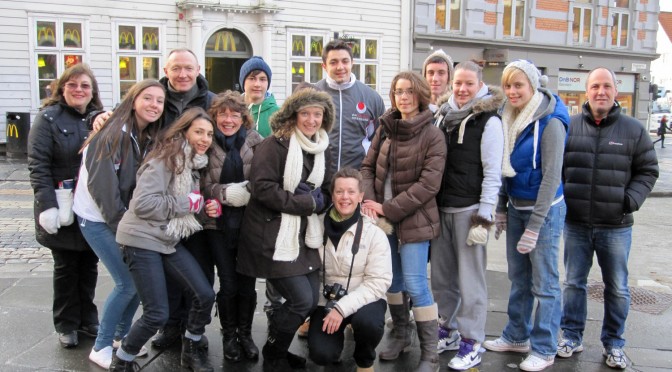
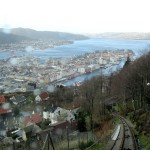
Bergen is a beautiful city, and aside from training, it was fun to be able to explore it with friends. We took a ride on the Fløibanen cable car to take in some wonderful views of the city and ate some mouth-wateringly fresh seafood.

Congratulations to JKA Norway on its Jubilee Anniversary!

Sasha

Categories
JKA Competitions News

JKA England 2011, London & South East Championship

After a long but very worthwhile day, Shiranamikai came away with 4 medals at the London and South East Championship!

David: Bronze in kumite
Parth: Bronze in kumite
Danny: Gold in kata, Bronze in kumite

Well done guys – and to everyone who competed!

Here are a few highlights of the day:

It was a close call between Fabiola and her opponent in kata but despite kiai-ing (her opponent didn’t), the flags went the other way.

In the men’s kumite division, Anthony looked strong and confident. David, despite receiving a cut eye (prompting ten minutes of first aid treatment), bravely continued and went on to take bronze.

1st Kyu Will sailed through his first round of senior grade kata. In the second round, his Heian Godan was sharp enough to earn a draw against an experienced 3rd dan, before going out on the next kata called.

Parth did well to maintain his concentration during one of the longest running kumite rounds and finished up with bronze. It took a long time for things to get moving on his area and there must have been lots of aches from sitting on the wooden floor for so long.

Finally, another good Heian Godan earned Danny top marks in the final and a gold medal.

So, great stuff! There was a really good atmosphere with family, friends and helpers supporting our competitors. Everybody came away with something: in some cases a medal; for others an insight on how to improve their karate or the inspiration to start competing.

The next competition will be the JKA England National Championship in July 2012. As usual we will be entering a team and look forward to bringing back another good set of results. For those of you that would like to enter – now is the time to set your goals and start working towards them at the dojo. One way to get a head start is the next JKA England course on Sunday 4th December at Loughborough University, Leicester.

Austin

error: